Wednesday, November 11, 2026
 

Market Trend Forum

10:00 Opening Remarks by Session Chair, Carina Lainer, Principal, Microelectronics, Quantum, Photonics, Optics and Electronic Chemicals, Roland Berger
10:05
The Global Semiconductor Market: Crossing the $1 Trillion Milestone in Q3 2026 and the Outlook Ahead
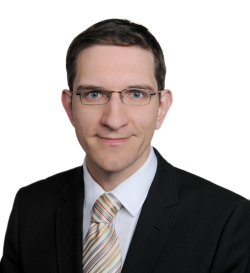

  Tobias Pröttel, CEO, WSTS
The Global Semiconductor Market: Crossing the $1 Trillion Milestone in Q3 2026 and the Outlook Ahead
Tobias Pröttel

Tobias Pröttel
CEO
WSTS

Tobias Pröttel

Abstract
The global semiconductor industry is experiencing an unprecedented period of growth, reaching a historic milestone by surpassing US$1 trillion in annual sales already in August 2026. Driven primarily by accelerating investments in artificial intelligence, data center infrastructure, and advanced computing, the market is expanding at a pace never seen before.Drawing on the latest statistics from World Semiconductor Trade Statistics (WSTS), this presentation examines the key developments shaping the global semiconductor market in 2026. It highlights the extraordinary growth of the Memory and Logic segments, regional market dynamics, and the contrasting developments across major end-use applications. Particular attention is given to the European semiconductor market and the differences between traditional Automotive and Industrial applications and the rapidly expanding AI-driven data center segment.Looking ahead, the presentation provides an updated market outlook based on WSTS forecasts, with global semiconductor sales projected to exceed US$1.6 trillion in 2026 and reach approximately US$2.1 trillion in 2027. The analysis offers insights into the underlying growth drivers, evolving market structure, and future opportunities for the global semiconductor industry.

Biography
Tobias PröttelCEO, World Semiconductor Trade Statistics (WSTS)Tobias Pröttel is the CEO of World Semiconductor Trade Statistics (WSTS), a global non-profit organization providing semiconductor market statistics and forecasts. In his role, he leads the organization's worldwide activities, working closely with leading semiconductor companies and regional industry associations to ensure reliable and transparent market intelligence.With extensive experience in the semiconductor industry, Tobias focuses on global market developments, industry trends, and forecasting. He regularly engages with industry leaders and international organizations to provide insights into the evolving semiconductor landscape and the key drivers shaping its future.

10:20
Global Semiconductor Landscape: Unlocking Opportunities for Partnership & Growth
  Sanjay Gambhir, Managing Director, India, AECOM
Global Semiconductor Landscape: Unlocking Opportunities for Partnership & Growth
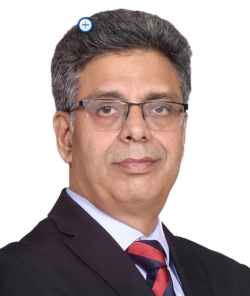

Sanjay Gambhir

Sanjay Gambhir
Managing Director, India
AECOM

Sanjay Gambhir

Abstract
The global semiconductor industry is entering a new phase of growth, evolving from a focus on capacity expansion toward the creation of resilient, innovation-driven ecosystems enabled by international collaboration. As nations strengthen semiconductor capabilities and diversify supply chains, strategic partnerships across regions have become critical to accelerating investment, technology transfer, talent development and manufacturing resilience. These collaborations also enable organizations to leverage the best combination of global expertise, technology, engineering capability, and execution resources, creating more cost-effective, and competitive solutions across the semiconductor value chain.Against this backdrop, India is emerging as one of the world's most attractive semiconductor destinations, with its market projected to grow from approximately USD 64 billion in 2026 to USD 200 billion by 2035. Supported by strong government initiatives, policy incentives and increasing private-sector investment, India offers significant opportunities for collaboration with semiconductor ecosystems across Europe, the United States, Japan, South Korea, Taiwan, Singapore, and other global technology hubs. The next phase of industry growth will be shaped not by individual markets acting alone, but by the strength of partnerships that connect complementary capabilities across the global semiconductor ecosystem.This presentation will explore the integrated capabilities required to successfully plan, design and deliver semiconductor infrastructure across the value chain, including silicon fabs, compound semiconductor facilities, ATMP/OSAT plants, advanced packaging facilities and research & development laboratories. It will highlight the importance of facility specific design and engineering strategies that balance standardization with customization, reflecting unique process requirements, technology roadmaps and project risk profiles. The session will demonstrate how global partnerships enable project teams to combine world-class expertise, innovative technologies and regional strengths to achieve optimized outcomes and enhanced value. Drawing on AECOM's global experience in delivering complex, high-technology facilities, the presentation will examine critical success factors across design, engineering, project management, cost management and construction management. Particular emphasis will be placed on early risk identification, integrated master scheduling, cost and schedule certainty, and effective coordination among stakeholders, technology providers, manufacturers and project teams operating across different geographies and cultures.The session will also review alternative project delivery models, including Design-Bid-Build, Design-Build/EPC, Construction Management, Program Management and hybrid approaches, demonstrating how delivery strategies can be aligned with project complexity, risk allocation and client objectives depending on the maturity of the ecosystem. In addition, it will address the growing importance of operational readiness planning from project inception, encompassing facility systems integration, process utilities, commissioning, workforce development and production ramp up to ensure a seamless transition from construction to operations.By combining industry insights, global best practices and integrated delivery strategies, this presentation will provide a practical perspective on how international partnerships can enable the successful delivery of future-ready semiconductor facilities. It will highlight how governments, investors, technology providers, manufacturers and engineering partners can work together to accelerate semiconductor growth, strengthen supply-chain resilience and create long-term value across the global semiconductor ecosystem. Through the integration of regional strengths, specialized expertise and global delivery capabilities, these partnerships can unlock cost-effective solutions, improve project certainty, accelerate project delivery and enhance competitiveness, ultimately supporting the next wave of semiconductor growth in India and around the world.

Biography
<strong>Dr. Sanjay Gambhir </strong>is a distinguished business leader with over 25 years of industry experience and 9 years of research expertise. Widely recognized for driving growth, innovation, and strategic transformation, he is a leading authority in <strong>Advanced Manufacturing, Data Centre </strong>and <strong>AI-ready Infrastructure</strong>. Throughout his career, he has established and led high-performing business lines focused on delivering complex, large-scale, mission-critical projects across multiple sectors. He founded AECOM’s <strong>Centre of Excellence for Advanced Manufacturing and Semiconductor Practice</strong> in India, creating a strong platform for business growth and industry leadership. His contributions have been recognized across the Asia-Pacific, Europe, and the Americas, where he has advanced operational excellence and industry best practices. A respected thought leader, Dr. Gambhir regularly shares his expertise through keynote addresses, and presentations at leading global conferences and industry forums.

10:35
Europe's Semiconductor Moment: Turning AI Disruption into European Opportunity
  Philipp Pfingstag, Partner, McKinsey & Company
Europe's Semiconductor Moment: Turning AI Disruption into European Opportunity
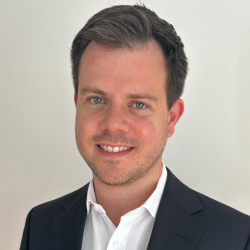

Philipp Pfingstag

Philipp Pfingstag
Partner
McKinsey & Company

Philipp Pfingstag

Abstract
Artificial intelligence is transforming the global semiconductor industry, with the market potentially more than doubling to $2.3 trillion by 2030. This unprecedented growth creates significant opportunities for Europe. With world-leading semiconductor equipment companies, cutting-edge research, and a strong industrial base, Europe has the foundations to play a pivotal role in the AI era. This presentation explores Europe's unique competitive strengths, and how Europe can seize this moment to build a lasting competitive advantage in the global semiconductor industry.

Biography
​Philipp Pfingstag is a Partner at McKinsey based in Stuttgart.​Since joining the firm in 2018, Philipp has served clients mostly in semiconductor on multiple topics with a focus on capacity expansion.Philipp holds a Ph.D. in Technology and Innovation Management from the Technical University of Munich and a M.Sc. in Chemistry and Business Studies from the University of Zurich. During his doctoral studies, Philipp spent several months at the Massachusetts Institute of Technology.

10:50
Power semiconductor trends in AI data centers
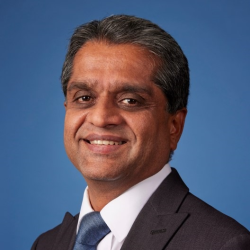

  Janardan Menon, Managing Director, Jefferies
Power semiconductor trends in AI data centers
Janardan Menon

Janardan Menon
Managing Director
Jefferies

Janardan Menon

Abstract
Data centre power demand is projected to sharply rise over the next five years, pushing power grids beyond their limits. There is a widening gap between the power requirement from forecasted AI accelerator shipments and the ramp of power supply by energy providers, with the gap estimated to be over 100% in North America by 2028. This gap is already a concern for financial markets and a cause for recent pressure on semiconductor shares. The industry is working on multiple approaches to address this growing power demand for AI, which includes finding alternative sources of power as well as reduce power losses. This includes: 1. Behind The Meter power generation which is predicted to grow at 48% CAGR in North America alone from 1.2GW in 2025 to 8.5GW in 2030.2. The transition to 800V HVDC transmission using power sidecars from 2028 and subsequently with Solid State Transformers and Solid State Circuit Breakers from around 2030, which helps reduce transmission losses within the data centre. 3. The transition to Vertical Power Delivery to the AI accelerator/GPU which is already underway and helps reduce power losses on the GPU board itself. The power delivery to the AI accelerator/GPU is expected to further transition to Substrate Integrated Voltage Regulator Modules by the end of the decade, further reducing power losses. 4. The increasing use of SiC and GaN to replace both silicon-based devices as well as electro-mechanical components to further help reduce power conversion losses. The presentation examines the impact of these constraints and transitions in data centre power supply and their potential impact on the semiconductor industry, especially for providers of power semiconductor solutions and associated equipment.

Biography
Janardan Menon has been covering the semiconductor and technology hardware sectors for 33 years. He worked as an analyst with the Gartner Group in Singapore, before moving to Dresdner Kleinwort in Hong Kong in 1997 where he headed up the Asian technology research team. He started covering European semiconductor stocks from 2002 at Dresdner Kleinwort. In 2009 he joined Liberum Capital where he focused on UK mid-cap technology stocks as well as the large cap European tech sector. He joined Jefferies as a Managing Director and analyst in 2021. Over the past 30 years Janardan has consistently remained a well respected and top ranked analyst in the semiconductor and Tech Hardware sectors.

11:05
From Electrification to Physical AI: Securing Europe's Leadership in Power Semiconductors
  Cedric Malaquin, Practice Lead, Power Markets, TechInsights
From Electrification to Physical AI: Securing Europe's Leadership in Power Semiconductors

Cedric Malaquin
Practice Lead, Power Markets
TechInsights

Abstract
For decades, Europe has been at the forefront of power electronics and power semiconductor innovation, enabling advances in industrial automation, energy infrastructure, and automotive electrification. European companies have built a unique ecosystem spanning OEMs, Tier 1 suppliers, semiconductor manufacturers, wafer fab equipment companies, materials suppliers, and world-class research organizations.Today, the semiconductor industry is entering a new chapter. As artificial intelligence expands beyond the datacenter into the physical world, demand for efficient, reliable, and sustainable power management is set to grow dramatically. From AI datacenters and robotics to smart factories and intelligent energy systems, power semiconductors will be critical enablers of the next wave of productivity and economic growth.Europe is well-positioned to capture this opportunity. Its long-standing strengths in automotive, industrial, and energy applications provide a strong foundation for emerging markets such as AI infrastructure and physical AI. Yet competitive pressures are intensifying as China expands manufacturing capacity, strengthens domestic supply chains, and accelerates development across both silicon and wide-bandgap power semiconductor technologies.This presentation will examine the evolving global power semiconductor landscape, Europe's competitive advantages, and the strategic actions needed to sustain technology leadership. It will explore how investment, innovation, ecosystem collaboration, and international partnerships can strengthen resilience, enhance competitiveness, and support long-term growth as the industry moves from the age of electrification to the era of physical AI.

Biography
Cédric Malaquin is Practice Lead for Power Markets at TechInsights, with over 20 years of experience in the semiconductor industry. He specializes in power semiconductors and RF front-end technologies, covering both compound semiconductor and silicon technologies across automotive, industrial, consumer, and datacenter applications. Prior to TechInsights, Cédric led the Radio Frequency Devices Market Analysis team at Yole Group and held a variety of technical roles at Soitec in process development, integration, and electrical characterization. He combines deep technical expertise with market insight to help clients navigate the rapidly evolving semiconductor landscape.

11:20
Europe's Semiconductor Future: Perspectives on Competitiveness
  Nadim Sah, Partner, Boston Consulting Group
Europe's Semiconductor Future: Perspectives on Competitiveness

Nadim Sah
Partner
Boston Consulting Group

Abstract
A perspective on Europe’s semiconductor future, exploring how reinvigorating industrial competitiveness, embracing technological innovation, and making strategic choices can strengthen Europe’s position in an increasingly complex global landscape.

Biography
Nadim is a Partner at the Boston Consulting Group and a core member of its Technology, Media & Telecommunications (TMT) practice, with a focus on semiconductors.Nadim joined BCG in 2015 and has worked extensively in strategy, organization, and go-to-market, as well as transaction-related topics. In his work with semiconductor clients and other tech companies, he often focuses on how to branch into adjacencies, innovate business models, build ecosystems or unlock new pathways through M&A.During his doctoral studies he worked briefly at the CERN (European Organization for Nuclear Research) and at the Deutsche Bundesbank.

11:35
From AI Demand to Manufacturing Reality: Scaling Across Fabs, Packaging, and Materials
  Clark Tseng, Sr. Director, SEMI
From AI Demand to Manufacturing Reality: Scaling Across Fabs, Packaging, and Materials
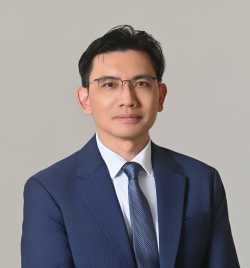
Clark Tseng

Clark Tseng
Sr. Director
SEMI

Abstract
AI infrastructure is reshaping the semiconductor manufacturing cycle, driving stronger investment in leading-edge logic, advanced memory, test, packaging, and the materials required to support increasingly complex devices and systems. This presentation will examine how these demand shifts are translating into fab investment, equipment spending, capacity expansion, and technology migration across the global semiconductor industry.The discussion will also look beyond the fab. As AI systems depend increasingly on advanced packaging, higher-bandwidth memory, interconnect, and more complex material requirements, manufacturing constraints are becoming more interconnected across the value chain. The presentation will explore how process intensity, packaging complexity, and materials demand are evolving alongside wafer capacity, and what these changes mean for investment priorities, supply-chain readiness, and regional manufacturing strategies in Europe and globally.

Biography
Clark Tseng is Senior Director of Market Intelligence at SEMI, where he leads the development and execution of global market intelligence strategies covering the semiconductor manufacturing supply chain. He oversees SEMI’s market research portfolio and global research partnerships, providing analysis and forecasts on fab investment, capacity, equipment, materials, and semiconductor manufacturing trends.Clark has extensive experience analyzing the semiconductor industry across foundry, IDM, memory, fabless, and OSAT markets, with a particular focus on manufacturing investment, technology transitions, and regional supply-chain dynamics.Before joining SEMI, Clark held strategic and analytical roles at leading technology companies. At MediaTek, he served as Deputy Director of the Computing, Connectivity, and Metaverse Business Group, providing market intelligence and competitive analysis across computing, connectivity, automotive, and emerging technology markets. Previously, he was Division Manager for Strategy and Business Development at Qimonda, where he led market and competitive intelligence activities for the Asia-Pacific region. He began his career as an analyst at IDC, covering semiconductor, flat-panel display, and telecommunications markets.Clark holds a Bachelor of Business Administration and a Bachelor of Arts in International Relations from National Chengchi University in Taiwan.

11:50 Closing Remarks by Session Chair, Carina Lainer, Principal, Microelectronics, Quantum, Photonics, Optics and Electronic Chemicals, Roland Berger