Wednesday, November 11, 2026
 

Smart Mobility

10:00 Opening Remarks by Session Chair
  Andreas Aal, Volkswagen Commercial Vehicles
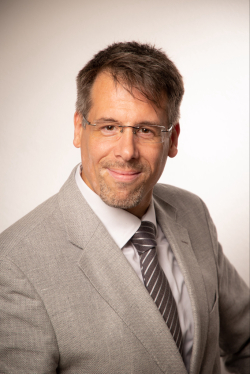
Andreas Aal

Andreas Aal

Volkswagen Commercial Vehicles

Biography
Andreas (SM/CRP) drove the semiconductor strategy activities at VW for many years, focusing on technology capability enhancements for the most advanced node-based chip products, including improved integration schemes, as well as optimisation of power electronics module qualification (both in funding projects and direct collaboration with industry players). In 2023, he joined VW Commercial Vehicles as system architect and project manager for Mobility-as-a-Service computing system solutions. He has 26 years of experience in the semiconductor industry, has authored over 50 publications on reliability, has given tutorials at IEEE IRPS and IIRW, as well as invited/keynote speeches at various conferences/conventions. Andreas is chair of the German VDE ITG MN 5.6 WG on (f)WLR, reliability simulations and qualification, chair of the European chapter of the SEMI Automotive Advisory Council and serves the Federal Ministry of Education and Research (BMBF) industry advisory board on cybersecurity. He is also a founding member of the Fraunhofer Chiplet Centre of Excellence (CCoE) and active within JEDEC and DKE.

10:05
Digital Twin and Architecture Exploration for Chiplet Ecosystem Optimization
  Nicolai Behmann, Technical Solution Architect, Siemens EDA
Digital Twin and Architecture Exploration for Chiplet Ecosystem Optimization

Nicolai Behmann

Nicolai Behmann
Technical Solution Architect
Siemens EDA

Nicolai Behmann

Abstract
The transition from monolithic SoCs toward chiplet-based architectures introduces new opportunities for scalability, reuse, and heterogeneous integration, but also creates new challenges in system architecture, interoperability, performance optimization, and ecosystem integration. In particular, combining chiplets from multiple vendors requires system developers to evaluate architectural choices and integration effects long before all physical components are available.This presentation introduces a Digital Twin-driven methodology for exploring and optimizing heterogeneous chiplet-based systems, combining virtual prototypes with physical components in hybrid environments. The approach enables chiplets, interconnects, memories, software workloads, and system-level behavior to be represented and evaluated at different levels of abstraction. Virtual models can therefore complement available silicon, enabling architecture exploration to start early and progressively evolve toward hybrid and physical system configurations.A particular focus is placed on multi-vendor chiplet interoperability. By integrating virtual representations of chiplets and subsystem components from different suppliers into a common system environment, architectural alternatives can be evaluated without requiring a complete physical implementation. This enables earlier investigation of system partitioning, chiplet selection, communication topology, memory architecture, compute allocation, and hardware/software interactions.The presentation will show how virtual and hybrid experimentation can turn the Digital Twin into an active architecture exploration environment rather than a static representation of the final system. Design alternatives can be evaluated against representative software workloads, allowing architects to investigate system-level trade-offs and identify integration issues before committing to silicon and packaging decisions.Ultimately, this approach provides a path toward a more open and collaborative chiplet ecosystem, where interoperability, architecture decisions, and system optimization can be evaluated digitally across vendor boundaries, reducing dependency on physical prototypes and enabling earlier convergence on system architectures.

Biography
Nicolai Behmann is a Technical Solution Architect at Siemens EDA, focusing on Digital Twin implementation and innovation at automotive customers through the PAVE360 program. His main interests include Machine Learning accelerators and Co-Design as well as mixed-fidelity modelling techniques. Before that, Nicolai was responsible for next-generation Compute Hardware for L4 robotaxis at Volkswagen. The topic of his PhD thesis and prior research at the Leibniz University Hannover includes application-specific hardware for automotive image signal processing

10:25 Addressing the Autonomous Driving live-cycle: Continuous Homologation & Compliance, Daniel Fulger, TÜV Rheinland
10:45
Enabling Sustainable AI Through Power Semiconductor Innovation and Test
  Giacomo Tonti, Marketing & Business Development Manager, Advantest Europe GmbH
Enabling Sustainable AI Through Power Semiconductor Innovation and Test
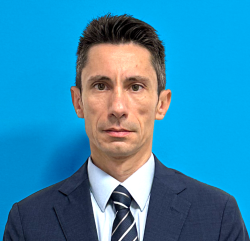

Giacomo Tonti

Giacomo Tonti
Marketing & Business Development Manager
Advantest Europe GmbH

Giacomo Tonti

Abstract
Modern test systems are no longer simply production tools; they are strategic enablers of innovation. As AI reshapes the world's energy landscape, Advantest power test solutions help unlock next-generation power semiconductors full potential by ensuring uncompromising efficiency, reliability, and performance.

Biography
Giacomo Tonti, born in Italy in 1978 and entered the semiconductor industry in 2000 following studies in Electronics and Telecommunications. He spent the first part of his career as a Service and Application Engineer specializing in analog and mixed-signal semiconductor devices.In 2015, he moved into Account Management, leading growth initiatives and business development activities for semiconductor customers. Since joining Advantest in 2024, he has been serving as Marketing and Business Development Manager for CREA, supporting strategic market expansion and customer engagement across the power semiconductor ecosystem.

10:55
Engineering for cyber resilience: Through-life modelling and analysis
  Siraj Shaikh, Swansea University
Engineering for cyber resilience: Through-life modelling and analysis
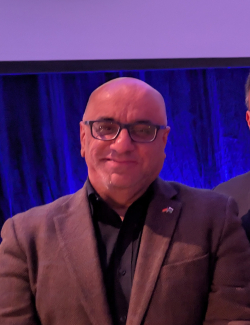
Siraj Shaikh

Siraj Shaikh

Swansea University

Abstract
Coming Soon

Biography
Siraj Shaikh is a Professor in Systems Security at Swansea University (UK), where his research interests sit at the interface of automotive cybersecurity, systems engineering and cyber-physical systems security. Siraj is well published in automotive cybersecurity, and he currently is a Member of the College of Experts part of the UK’s Department for Transport (DfT) Scientific Advisory Council (SAC).Previously, he has been an Industrial Fellow to HORIBA MIRA, funded by the Royal Academy of Engineering (RAEng). More recently he served as an Independent Scientific Adviser to The Alan Turing Institute under the BridgeAI initiative. He serves as Chair for the Security Workstream of the Global Automotive Advisory Council at SEMI.

11:15 Reserved
11:35 Closing Remarks
  Andreas Aal, Volkswagen Commercial Vehicles
Andreas Aal

Andreas Aal

Volkswagen Commercial Vehicles

Biography
Andreas (SM/CRP) drove the semiconductor strategy activities at VW for many years, focusing on technology capability enhancements for the most advanced node-based chip products, including improved integration schemes, as well as optimisation of power electronics module qualification (both in funding projects and direct collaboration with industry players). In 2023, he joined VW Commercial Vehicles as system architect and project manager for Mobility-as-a-Service computing system solutions. He has 26 years of experience in the semiconductor industry, has authored over 50 publications on reliability, has given tutorials at IEEE IRPS and IIRW, as well as invited/keynote speeches at various conferences/conventions. Andreas is chair of the German VDE ITG MN 5.6 WG on (f)WLR, reliability simulations and qualification, chair of the European chapter of the SEMI Automotive Advisory Council and serves the Federal Ministry of Education and Research (BMBF) industry advisory board on cybersecurity. He is also a founding member of the Fraunhofer Chiplet Centre of Excellence (CCoE) and active within JEDEC and DKE.